
‘by A.L. Major’
In April, the Atlantic Monthly published an article that was so ill-advised I hesitate to post a link to the article for fear of increasing its page count and further sensationalizing the author’s bogus argument. The article was about creative writing programs. An impassioned, somewhat jilted, author, Jon Reiner, makes a case for why instead of going to MFA schools, wanna-be published authors should go out and live—similar to arguments for why writers need to have “real-life jobs” before writing. Considering the sheer number of Creative Writing MFA programs in the U.S, there is a high likelihood that young, well-educated, straight-out-of-college aspiring writers are going to slip their way into those cherished programs, but of the many faults, Jon Reiner made, the gravest perhaps is how he grossly misjudges the lives of those “young” students. His stance that younger students have not lived comes from a ridiculously, narrow and American perspective; for he assumes MFA students grew up in American suburbs and were pampered by their middle to upper class families. But, believe me, I don’t want to write a post about his article article, especially so belatedly. In fact, I’ve only mentioned it to say how it got me thinking about my lack of long-term job experience and how as a young girl growing up in a developing country jobs, first jobs especially, didn’t always seem like a job in the quintessential sense.
by
Gina Balibrera
Louis Malle and Andre Gregory’s brilliant adaptation of Chekhov’s Uncle Vanya, Vanya on 42nd Street, begins on the street. A group of actors converge early in the morning, sip coffee from styrofoam cups, and make their way to rehearsal in a dim theater. Once inside, a groggy Wallace Shawn reclines on a bench and closes his eyes for a nap. Around him, Shawn’s fellow actors chatter nonchalantly, their backstage voices easing into Chekhov’s words.
by Nathan Go
Crafting good endings, like good openings, is among the most difficult feats to attain in a short story. So much pressure lies in its mastery – where a solid or tepid opening could mean the difference between having a work read or not read beyond the first page, a satisfying or lackluster ending often decides whether the piece gets published or not. The final paragraph of a story is usually what readers take away from the entire experience, as it is the last thing they get to process, and thus, the last thing they’re likely to remember.
Apart from the exhortations that a story needs to tie up all loose ends and bring closure to the readers, discussing what constitutes a good ending frequently devolves into the famous pronouncement in the concurring opinion of Jacobellis v. Ohio: “I know it when I see it.” As is the case with establishing aesthetic rules in writing, generalizations usually don’t work. In fact, what may sound like an effective closing to one reader might just be totally underwhelming to another. With those caveats in mind, the next best thing is to present case studies of endings that I think work (at least for me) within the context of those particular stories.
by A.L. Major
It’s that time of year again: SUMMER. For students, or recently graduates like myself, summer brings with it a freedom that seems limitless. Faced with so much time to do what I like, I always make a list of what I’d love to read. For those employed year-round, summer doesn’t necessarily evoke anymore those long stretches of free, unscheduled time, but I put forth this reading list in the hopes that whether you’re lounging on a beach, stuck in an office from 9-5 or doing some combination of both, you’ll give yourself time to read a w0rk that is truly lovely and inspiring. Nathan Go already started off his summer reading list with suggested works by Filipino and Filipino-American authors. Similar to my summer reading list last year, I’m going to keep my list eclectic and globally diverse. There are some some books I’ve read, some books I look forward to reading and some that have been adapted into films–for those, like myself, who love reading books and watching films and noticing, sometimes irritatingly, the differences between two versions of the same story.
by Claire Skinner
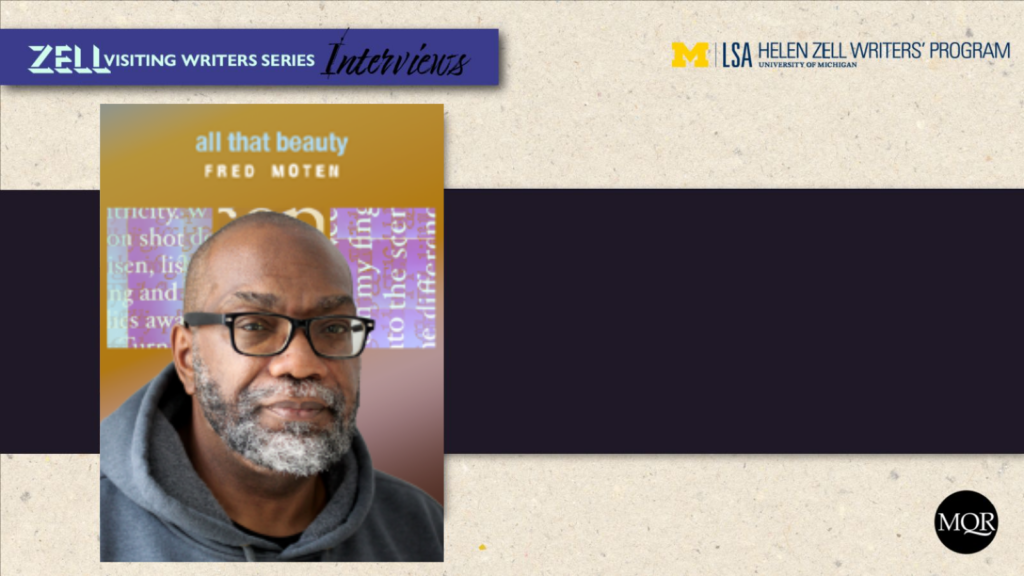
For each essay, I would set myself up as though I were allowed to make a collage using last Wednesday’s newspaper, a 1996 issue of Art Forum, and the notes I took while on layover at the Minneapolis/St Paul airport. And the reason for each particular assemblage was not random: there was always some hunch that I was trying to articulate in the gathering. Race, place and art are ongoing themes. So for example, in one essay, the video of Ana Mendieta killing a chicken helps me begin to untangle what it felt like to travel in South Africa. Or, in another essay, I talk about the way that three filmmakers approach the experience of time in their films as I reminisce about living in Paris for a summer with my father.